The UAE leadership has driven forward economic diversification efforts already before the oil price crash in the 1980s, and the UAE is nowadays the most diversified economy in the Middle East and North Africa region. Although the oil and gas sector does still play an important role in the UAE economy, these efforts have paid off in terms of great resilience during periods of oil price fluctuations and economic turbulence. In 2018, the oil and gas sector contributed 26% to overall GDP. While the government may still adjust the exact arrangement of the VAT, it is not likely that any new taxes will be introduced in the foreseeable future. Additional taxes would destroy one of the UAE's main enticements for businesses to operate in the country and put a heavy burden on the economy. The UAE emits a lot of carbon dioxide per person compared to other countries.

The Barakah nuclear power plant is the first on the Arabian peninsula and expected to reduce the carbon footprint of the country. The UAE has developed from a juxtaposition of Bedouin tribes to one of the world's most wealthy states in only about 50 years. Between 2000 and 2018, average real gross domestic product growth was at close to 4%. It is the second largest economy in the GCC , with a nominal gross domestic product of US$414.2 billion, and a real GDP of 392.8 billion constant 2010 USD in 2018. Since its independence in 1971, the UAE's economy has grown by nearly 231 times to 1.45 trillion AED in 2013.

The non-oil trade has grown to 1.2 trillion AED, a growth by around 28 times from 1981 to 2012. Backed by the world's seventh-largest oil deposits, and thanks to considerate investments combined with decided economic liberalism and firm Government control, the UAE has seen their real GDP more than triple in the last four decades. Nowadays the UAE is one of the world's richest countries, with GDP per capita almost 80% higher than OECD average.
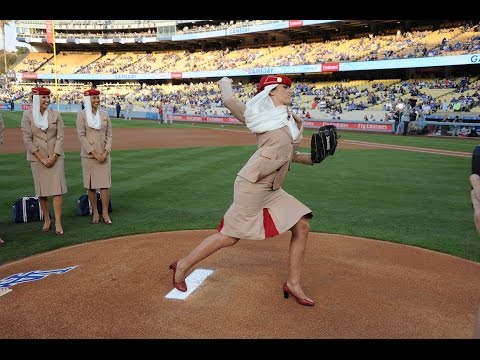
It occupied 8th place globally and first in the Middle East on the list of the most advanced countries in the tourism and aviation sectors, according to the 2013 travel and tourism competitiveness report, having risen two places since 2011. The United Arab Emirates is a country that is made up of seven emirates. Those are Abu Dhabi, Dubai, Sharjah, Ajman, Fujairah, Ras al-Khaimah, and Umm al-Qaiwain.

While the country as a whole has a prime minister and federal president, each emirate has its own ruler that oversees the local governments. The UAE was established in 1971, and since that time, it has seen great population growth. Its largest city is Dubai, which has reached the one million resident milestone with a population of 1.1 million. This is the only city with a population exceeding one million. However, there are other cities within the UAE that have high population counts. The second most populous city, Abu Dhabi, has over 600,000 residents.
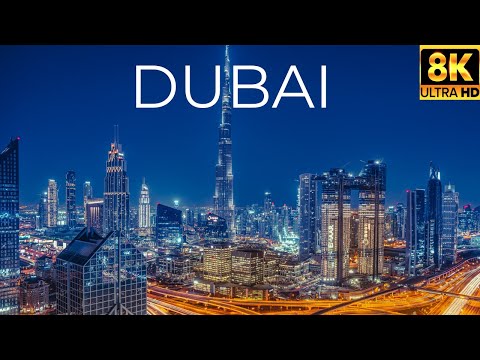
There are four additional cities with populations that have surpassed 100,000. Seven cities have populations that are between 10,000 and 100,000, while remaining cities and towns make up the remainder of the population. Dubai is the most populous and the largest emirate in the UAE with approximately 2,502,715 people. Notably, it is the most progressive emirate among the seven emirates. Dubai is classified as an alpha city due to its strong economy.
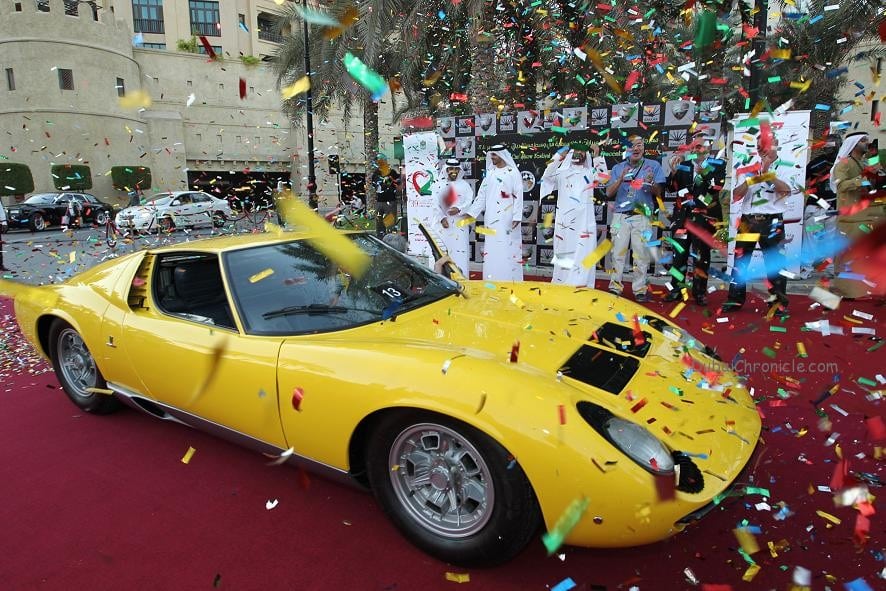
Despite being a desert, the country has managed to utilize its resources and according to the 2015 statistics, it has an annual GDP of 105.6 billion USD. Unlike its neighboring emirates such as Abu Dhabi, the oil reserves of Dubai have been exhausted; oil contributes only 2 % of the total GDP of this emirate. Although it started as a port, Dubai has developed into a luxurious emirate that is home to the world's tallest building.

The UAE's monetary policy stresses stability and predictability, as the Central Bank of the UAE keeps a peg to the US Dollar and moves interest rates close to the Federal Funds Rate. This policy makes sense in the current situation of global and regional economic and geopolitical uncertainty. In the mid- to long term, however, the peg will become less important, as the UAE transitions to a knowledge-based economy – and becomes yet more independent from the oil and gas sector . As impressive as economic growth has been in the UAE, the total population has increased from just around 550,000 in 1975 to close to 10 million in 2018. This growth is mainly due to the influx of foreign workers into the country, making the national population a minority. The UAE features a unique labour market system, in which residence in the UAE is conditional on stringent visa rules.

This system is a major advantage in terms of macroeconomic stability, as labour supply adjusts quickly to demand throughout economic business cycles. Human occupation has been traced back to the emergence of anatomically modern humans from Africa some 124,000 BCE through finds at the Faya-2 site in Mleiha, Sharjah. Burial sites dating back to the Neolithic Age and the Bronze Age include the oldest known such inland site at Jebel Buhais. Known as Magan to the Sumerians, the area was home to a prosperous Bronze Age trading culture during the Umm Al Nar period which traded between the Indus Valley, Bahrain and Mesopotamia as well as Iran, Bactria and the Levant.

The ensuing Wadi Suq period and three Iron Ages saw the emergence of nomadism as well as the development of water management and irrigation systems supporting human settlement in both the coast and interior. The Islamic age of the UAE dates back to the expulsion of the Sasanians and the subsequent Battle of Dibba. The UAE' history of trade led to the emergence of Julfar, in the present-day emirate of Ras Al Khaimah, as a regional trading and maritime hub in the area. The maritime dominance of the Persian Gulf by Emirati traders led to conflicts with European powers, including the Portuguese Empire and the British Empire.
Islam is the official religion and Arabic is the official language. The United Arab Emirates' oil and natural gas reserves are the world's sixth and seventh-largest, respectively. Zayed bin Sultan Al Nahyan, ruler of Abu Dhabi and the country's first president, oversaw the development of the Emirates by investing oil revenues into healthcare, education, and infrastructure. The United Arab Emirates has the most diversified economy among the members of the Gulf Cooperation Council.
In the 21st century, the country has become less reliant on oil and gas, and is economically focusing on tourism and business. The government does not levy income tax, although there is a corporate tax in place and a 5% value-added tax was established in 2018. The UAE ranked 2nd globally in attracting and receiving foreign investments, according to a 2014 report by the United Nations Conference on Trade and Development . The report noted continued high inflows of foreign investments to the UAE for the fourth consecutive year.

The fact that the traditional tribal system of government each emirate was based on similar political principles facilitated the establishment of the UAE. Hereditary dynastic family rule still operates in each emirate as a local government system under the umbrella of the federal system. Members of the ruling families occupy the most important positions in their political administrations. While the political system continues to retain some of its traditional values at formal and informal levels, it has been able to keep pace with economic and social change.

The sheikhs are highly regarded for performing the dual roles of modernizers and guardians of the cultural heritage. They still have traditional majlis where citizens have access to their leaders. Social development efforts, most particularly the nurturing of the country's citizens or "human capital," have been a priority of the UAE government since the early years of the federation. Immense resources have been applied to provide modern social and economic development infrastructure in education, health, and social welfare. The UAE also achieved the 3rd rank globally in financial government policy, 4th globally in administrative practices, and 8th globally in labour market flexibility.

Which Is The Fourth Largest Emirate In Uae In addition, the UAE ranked among the top five countries worldwide in 35 indicators in the new global report, which consists of 330 indicators. The UAE ranked 8th globally in Global Competitiveness for the second consecutive year, outranking countries such as Denmark and Norway. RAK boasts a thriving economy based on agriculture, manufacturing and increasingly, tourism.

The emirate, home to a population of just 416,600 people, also benefits from a stable governance and an attractive business environment that has made it a popular hub for local and international companies. Efforts have been made to lessen the country's dependence on oil and shift to a more diversified economy, but, according to 2009 figures, more than 85 percent of the UAE's economy depended on exported oil and gas. Oil production was 2.8 million barrels per day in 2009, making the UAE the world's 8th highest-producing country. Its oil exports were estimated in 2007 at 2.7 million barrels per day , and its oil proven reserves were estimated in 2010 to total 97.8 billion barrels. The UAE is also a major natural-gas producer, with production reaching 50.3 billion cubic meters (2008 est.), making it the 18th largest globally. Exports of natural gas were estimated in 2008 to be 7.6 billion cubic meters , and proven reserves of January 2010 were 6.1 trillion cubic meters .

Despite its contributing almost one-third of the UAE GDP, the oil sector employs a small percentage of its workforce. Population estimates of the country in 2000 ranged from 2.6 to nearly 3 million. It serves as the financial, transportation, and communications center of a major petroleum-producing area.
Abu Dhabi also has a large port and is home to federal government ministries and embassies. Dubai is the main trading center of the entire Gulf, has the principal port facilities of the UAE as well as its busiest airport, and has several large commercial enterprises. Few countries in history have experienced, in less than four decades, a huge shift in income and development comparable to that of the United Arab Emirates during the last part of the twentieth century. The UAE developed a public national educational system in a thirty year period that is similar to what Western countries established in over a hundred year period.

Since the early 1960s the UAE has emerged from relative obscurity in global affairs to become one of the wealthiest and most dynamic of the smaller countries of the world. The rapid infrastructure development in virtually every corner of the country provides visual evidence of immense change. Public and private construction and modern consumption patterns are in evidence throughout the country. The change could still make life easier for companies involved in the energy sector, however.

Many crude and fuel traders based in the region already work a Monday-to-Friday week in line with global oil markets. The emirates of Dubai and Abu Dhabi both trade their crude oil on exchanges following Monday-to-Friday hours. Since 2011, the UAE has aggressively cracked down on opposition activists, particularly if they are suspected of belonging to the Association for Reform and Guidance (Al-Islah), a group formed in 1974 to advocate for democratic reform. The government has accused members of Al-Islah of being foreign agents of the Muslim Brotherhood intent on overthrowing the regime, and designated the Muslim Brotherhood as a terrorist organization in 2014. Qatar's support for the Muslim Brotherhood has been a factor in efforts by the UAE, Saudi Arabia, and their regional allies to isolate that country since 2017.

The states gained autonomy following World War II (1939–45), when the trucial states of Bahrain and Qatar declared independent statehood. The rest were formally united in 1971, with the city of Abu Dhabi serving as the capital. Ras al-Khaimah is situated to the northern part of the UAE, bordering part of Oman's territory, the Musandam. The population of this emirate is 205,000 people, and the Emirati citizens are the largest group. Ras al-Khaimah does not have any oil, and it has, therefore, focused on advancing its industrial sector. The primary economic areas of Khaimah include real estate, tourism, building materials, service sector, and agriculture.

The most recognized types of attraction in this emirate include shopping, nature, parks, water, and amusement parks. The capital city of this emirate is also referred to as Ras al-Khaimah and it is a home to most of the citizens of Ras al-Khaimah emirate. The UAE ranked 30th globally out of the 139 countries covered in the Travel and Tourism Competitiveness report for 2011, issued by the World Economic Forum, while it maintained first place in the Middle East in the travel and tourism sector. 11.2 million tourists visited the UAE in 2012, according to the Forum, which predicted a rise to 18.8 million tourists in 2022.
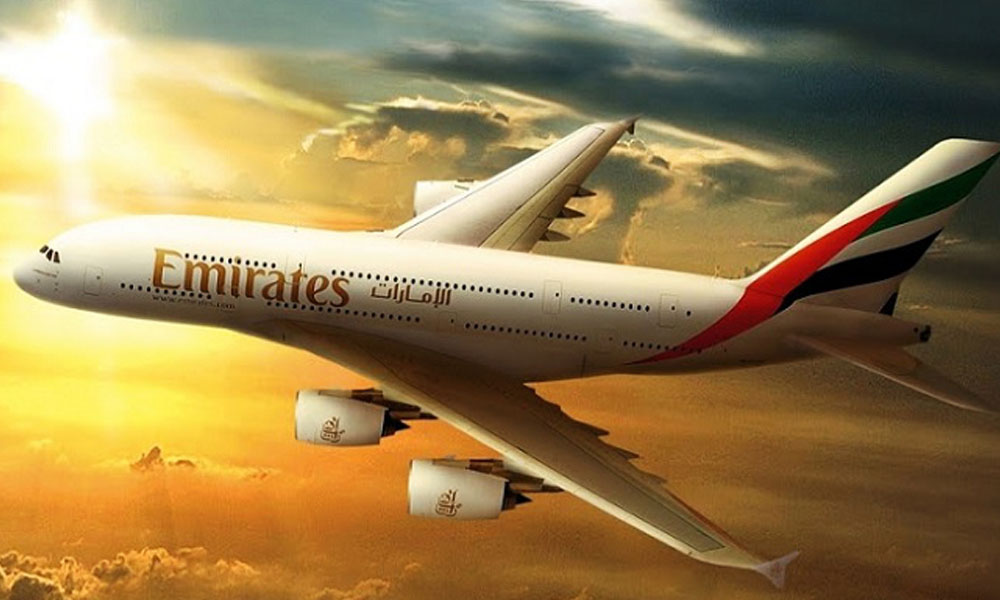
Total tourist spending in the UAE reached Dh111bn, and is expected to reach Dh113.8bn by 2022. Over the past decade, the UAE has ranked among the top countries in human development reports issued by the annual United Nations Development Programme. It also ranked second regionally, and 41st globally among 157 countries, in the Human Development report for 2013. In the Human Development Index, which includes 47 countries, it shared 41st place with Lithuania.

This index, which measures the average achievements in basic aspects of human development. The welfare system offers womb-to-tomb free state services for all nationals, including high-quality health care, education up to the tertiary level, social security, family allowances, subsided electricity and water, and housing for low-income groups. This is a major way of distributing oil wealth among the national population. The immigrant population also benefits to some extent, particularly in regard to medical care. With declining oil prices, the government has attempted to diversify the national economy. This has led to the growth of industry, construction, commerce, free trade zones, transportation, tourism, farming, fisheries, and communications.

The rapid development of these sectors has reduced the nation's dependence on oil. In 1998, the gross domestic product was estimated at $45,590 million, 70 percent from the nonoil sector. The United Arab Emirates is a federation of seven independent states located in the southeastern corner of the Arabian Peninsula. The politics of the region includes differences in geographical names. The "Persian" or "Arabian Gulf" borders the region to the north, Saudi Arabia to the south and west, and Oman to the east. Before the discovery of oil in the 1950s, the UAE was a group of low-income emirates under the protection of the British.

Oil brought rapid growth and modernization to the area, and these small states became independent as the UAE in 1971. Placed 284th in the global rankings, United Arab Emirates University comes fifth in the Arab region ranking. It's based in the city of Al Ain in the emirate of Abu Dhabi, and is the oldest university in the country – though still relatively young, having been established in 1976. Its alumni community includes many powerful leaders in the fields of government and business. Abu Dhabi is the capital and largest of the United Arab Emirates.
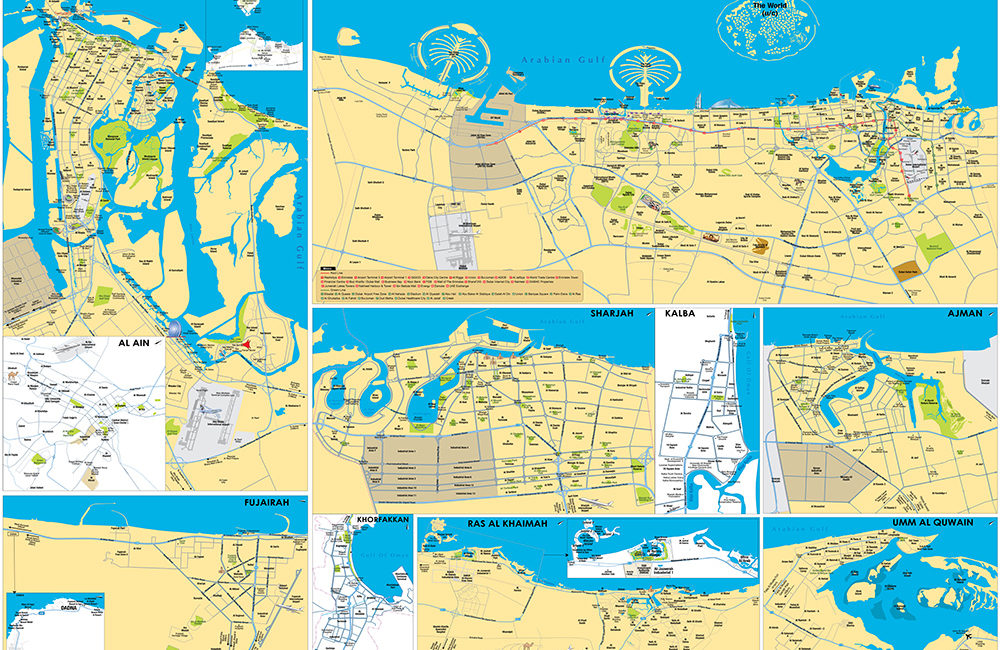
It is a place of enormous wealth thanks to its oil reserves, but it is also a region with an eye towards sustainable economic and environmental development. Students may visit the most expensive hotel ever constructed in the world, walk along the seaside Corniche, or tour the rapidly developing Saadiyat Island and Yas Island (home to a world-class racetrack, yacht club, and Ferrarri World). Al Ain (which in Arabic means "The Spring"), also known as the Garden City due to its greenery, is the second largest city in the Abu Dhabi Emirate and the fourth largest city in the United Arab Emirates. It is close to the Omani border, and has a unique desert/mountain landscape that make it a popular tourist attraction for locals and expats alike.
Bordering the Arabian Gulf and the Gulf of Oman, the Untied Arab Emirates has grown to be one of the most important economic centres in the Middle East. The federation of seven emirates includes the booming international metropolis, Dubai, as well as the capital city and powerhouse, Abu Dhabi. Four Seasons is pleased to operate three modern, ultra-chic hotels and resorts in the UAE, all sure to make your stay in the country unforgettable. A number of well-known commentators have been jailed in recent years for criticizing the authorities, expressing support for dissidents or human rights, or calling for political reform. Leading human rights activist Ahmed Mansoor, who was sentenced to 10 years in prison in 2018 for using social media to "publish false information that damages the country's reputation," was among those who remained behind bars in 2020.
Though small in size , the UAE has become an important player in regional and international affairs. Strategically located in the Arabian Gulf, and within an eight-hour flight of two-thirds of the world's population, the UAE is a modern crossroads, connecting East and West. As such, the UAE's two largest cities, Abu Dhabi and Dubai, have also emerged as regional centers for business, education, culture and tourism.
Tourism is a crucial factor in the growth of the UAE economy, especially in Dubai where trade plays an important and essential role in tourist activities. The emirate was historically well-known for its flourishing pearl trade and its strong business ties with India and neighboring countries. In the years that followed, the tourism sector steadily grew and evolved, developing dramatically with the discovery of oil in Dubai which turned the city into a hub for aspiring and ambitious businessmen. With a total population of 68,000 people, Umm al-Quwain is the least populous state in the UAE. Unlike the other emirates, Quwain has not made any findings of oil products or gas.


No comments:
Post a Comment
Note: Only a member of this blog may post a comment.